
✨ This article was AI edited. Editorial responsibility: WindPowerFacts.info.
Produced with AI. This article was artificially generated. Editorial responsibility: WindPowerFacts.info.
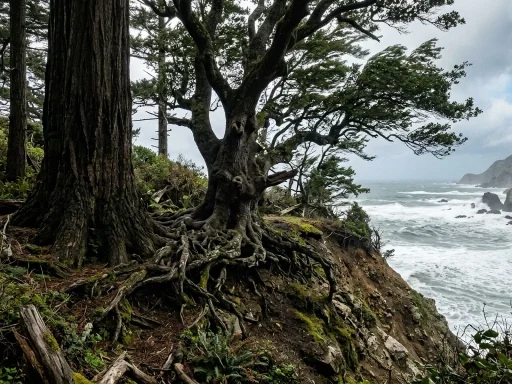
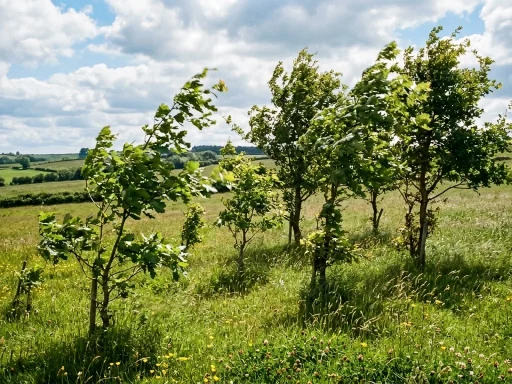
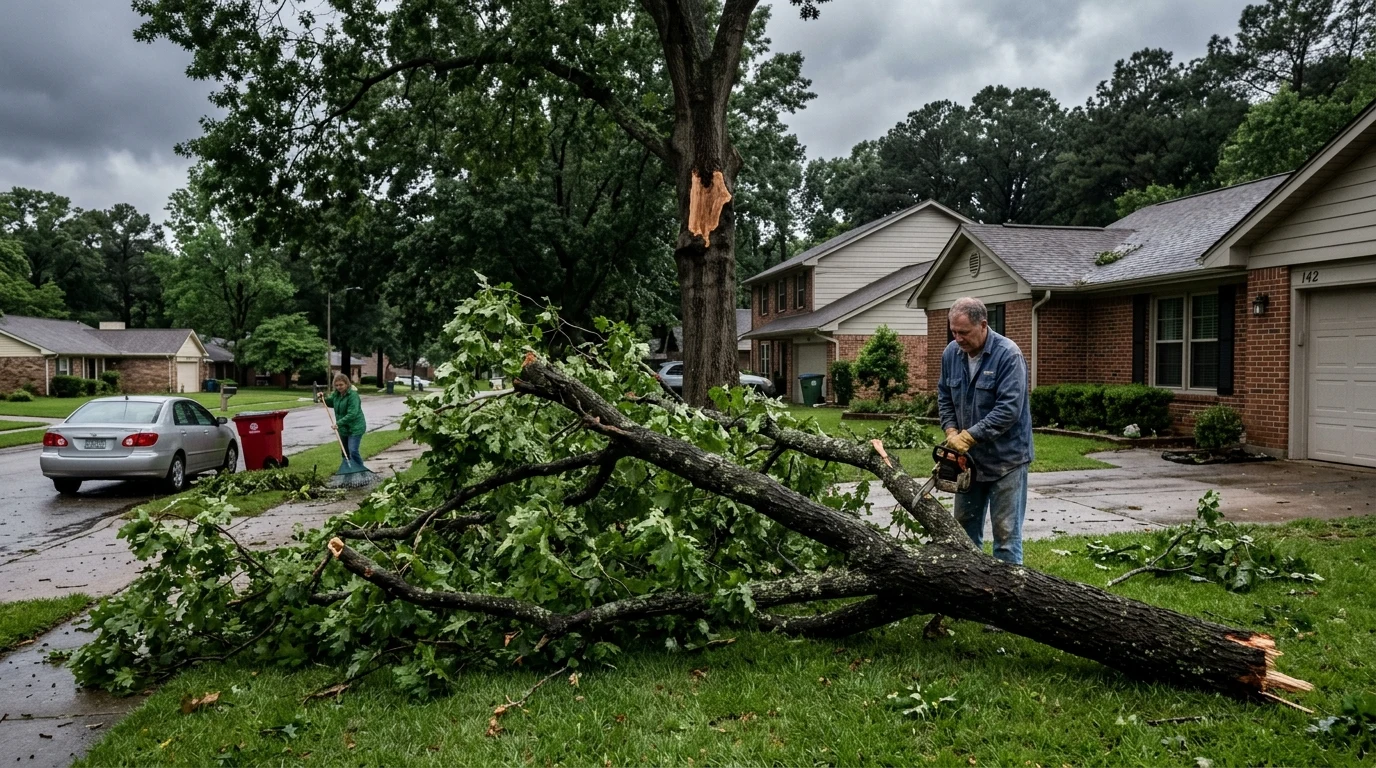
Wind damage to trees occurs when lateral atmospheric forces exceed a tree’s mechanical load-bearing capacity, leading to branch shearing, trunk fractures, or complete root-plate overturn (windthrow). Severity depends on aerodynamic drag, soil moisture saturation, internal wood decay, and species-specific modulus of rupture. Proper crown architecture and structural pruning mitigate storm losses.
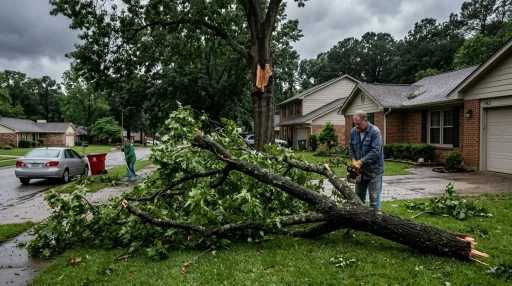
Every year, severe windstorms, localized microbursts, dereches, and cyclonic weather systems inflict catastrophic physical damage on urban forests, commercial orchards, and residential landscapes. Wind damage to trees not only creates substantial financial liability and power grid interruptions but also permanently degrades tree physiological health. Understanding the biomechanics of wind-induced failure allows arborists and property managers to anticipate failure modes, execute preventative pruning, and safely manage post-storm recovery.
The Four Primary Biomechanical Modes of Wind Failure
Trees are self-optimizing biological structures designed to dissipate mechanical kinetic energy through damped oscillations. When wind loads surpass the elastic limit of xylem tissue or soil anchorage, trees fail through four distinct physical mechanisms:
| Failure Classification | Physical Mechanism | Primary Environmental Trigger | Structural Symptoms | Salvage Potential |
|---|---|---|---|---|
| Windthrow (Uprooting) | Root-soil plate rotational shear failure | Prolonged heavy precipitation followed by >45 mph winds | Exposed horizontal root plate; soil heave; tilted trunk | Very Low (Total Loss) |
| Stem Fracture (Trunk Snap) | Bending stress exceeds wood tensile/compressive modulus | Sudden turbulent gusts impacting dry, unyielding trunk | Clean or splintered transverse fracture along mid-trunk | Zero (Immediate Hazard) |
| Branch Shearing (Tear-Out) | Torsional stress at branch junction exceeds collar adhesion | High aerodynamic drag on long lateral limbs | Stripped bark below collar; broken primary scaffold limbs | Moderate (Requires Canopy Balancing) |
| Crown Twisting (Torsion) | Asymmetric canopy generates rotational torque along stem | Multidirectional swirling wind shears canopy unevenly | Spiral cracks along trunk bark; vascular cambium disruption | Low-Moderate (Structural decline) |
Underlying Factors That Amplify Tree Vulnerability to Wind
Wind damage rarely strikes trees uniformly across a geographic area. Instead, severe damage concentrates among trees exhibiting specific pre-existing biological or environmental weaknesses:
1. Asymmetrical Canopy and Crown Density
Trees that grow near buildings, along forest edges, or competing for sunlight often develop one-sided, lopsided canopies. When wind strikes an asymmetrical canopy, it exerts asymmetrical rotational torque rather than balanced drag, twisting the trunk and concentrating tremendous shear stress on one side of the vascular column.
2. Internal Decay and Heartwood Rot
Fungal sapwood and heartwood rot (caused by species such as Inonotus, Fomes, and Ganoderma) metabolize cellulose and lignin. This process hollows out the structural cylinder of the tree. Under engineering mechanics, a hollow cylinder can retain considerable strength if the remaining sound wood shell exceeds 30% of the total radius; once sound wood drops below this threshold, trunk snapping becomes inevitable under moderate wind loading.
3. Codominant Stems and Included Bark
Trees that split into two or more main trunks of equal diameter (codominant stems) lack the protective branch collar that reinforces single-leader trees. As the two stems grow against each other, bark becomes trapped between them (included bark). This creates a permanent seam of zero wood fiber connectivity that wedges apart easily under wind-driven canopy oscillation.
4. Shallow Water Tables and Root Restriction
Urban trees constrained by sidewalks, retaining walls, parking lots, or compacted subsoil develop shallow, pancake-like root systems rather than deep structural sinker roots. Without sufficient soil volume to counterbalance crown lever-arm forces, these trees overturn readily during gale-force events.
Comparative Vulnerability of Common Tree Species
Tree species exhibit divergent evolutionary adaptations to wind stress. The table below compares species resilience, wood properties, and associated storm risks:
| Tree Species | Growth Rate | Wood Strength & Flexibility | Wind Damage Susceptibility | Common Storm Failure |
|---|---|---|---|---|
| Sugar Maple (Acer saccharum) | Slow to Moderate | High density, stiff fibers | Low (Resilient) | Minor upper branch breakage |
| Bur Oak (Quercus macrocarpa) | Slow | Very high density, deep taproot | Very Low (Highly Resilient) | Twigs only; resists severe gales |
| Bald Cypress (Taxodium distichum) | Moderate | Flexible wood, buttressed base | Very Low (Hurricane Resilient) | Needle strip; exceptional anchorage |
| Loblolly Pine (Pinus taeda) | Fast | Moderate density, brittle stem | Moderate-High | Mid-stem trunk snapping in top-heavy trees |
| Silver Maple (Acer saccharinum) | Very Fast | Low density, soft, brittle | High (Severe Risk) | Large limb tear-out, hollow trunk fracture |
| Callery / Bradford Pear (Pyrus calleryana) | Fast | Weak, narrow-angle crotches | Extreme (Severe Risk) | Total canopy collapse at trunk union |
| Lombardy Poplar (Populus nigra) | Rapid | Low density, weak wood | High (Severe Risk) | Whole-tree blowdown and heavy branch snap |
Emergency Post-Storm Response Protocol
Immediately following a destructive windstorm, property owners must navigate safety hazards systematically to prevent personal injury and further structural damage:
- Establish a Safe Perimeter (Check for Downed Power Lines): Never approach trees touching or near utility lines. Treat all downed lines as energized, stay at least 35 feet away, and notify emergency utility services immediately.
- Conduct a Ground-Level Hazard Assessment: Survey the canopy from multiple angles for “widow-makers”—partially broken, hanging branches caught in lower limbs that can fall without warning.
- Evaluate Root Plate Stability: Inspect the ground around the base of leaning trees. If the root plate has lifted or cracked the surrounding soil, the tree cannot be safely stabilized and requires immediate professional removal.
- Execute Clean Pruning Cuts: For damaged branches remaining on standing trees, make clean, three-cut pruning cuts just outside the branch bark ridge and collar. Do not tear the bark down the trunk, and never top the tree.
- Engage an ISA-Certified Arborist: For complex canopy fractures, cabling and bracing assessments, or trees larger than 12 inches in diameter, hire a professional with Tree Risk Assessment Qualification (TRAQ).
Preventative Pruning and Proactive Wind Mitigation
Rather than reacting to storm damage after the fact, proactive tree care can decrease wind resistance and double storm survival rates:
- Crown Reduction and Thinning: Selectively prune up to 15–20% of small interior canopy branches to allow wind to pass freely through the crown, lowering drag coefficients by 25–35%.
- Subordination Pruning for Codominant Stems: When trees are young, shorten one of the competing leaders to establish a single dominant central trunk with strong, wide-angled branch attachments.
- Dynamic Cabling and Bracing: For historic or high-value trees with weak structural crotches, install flexible synthetic cabling systems that allow natural movement during gentle breezes while arresting extreme deflection during severe storms.
- Soil Decompaction and Root Health Management: Apply organic mulch beneath the canopy drip line to preserve root moisture, prevent soil compaction from lawn mowers, and foster mycorrhizal root networks.
Frequently Asked Questions
Can a tree recover from severe wind damage?
Yes, provided at least 50% of the healthy crown remains intact and the main trunk has not suffered vertical splitting or root plate lifting. Trees seal off damaged areas through compartmentalization (forming barrier zones) and produce epicormic sprouts to rebuild leaf area.
Why do healthy-looking trees suddenly blow down in moderate wind?
Healthy foliage can mask extensive subterranean decay. Fungal root rot often destroys structural anchor roots while leaving the fine feeder roots intact, meaning the canopy looks vibrant and green right up to the moment the root plate fails.
Does homeowner’s insurance cover trees damaged by wind?
Typically, standard homeowner’s policies cover tree removal costs only if the fallen tree damages an insured structure (such as a house, garage, or fence) or blocks a driveway. If a tree falls on an open lawn without damaging property, removal is usually the homeowner’s responsibility.
When is the best time to prune trees to prevent wind damage?
Late winter to early spring during the dormant season is ideal for structural pruning. Without foliage, the branching architecture is fully visible, and trees heal rapidly as spring growth commences.
Get our latest guides, news, and insights highlighted in your Google Search & AI Overviews.