

✨ This article was AI edited. Editorial responsibility: WindPowerFacts.info.
Produced with AI. This article was artificially generated. Editorial responsibility: WindPowerFacts.info.
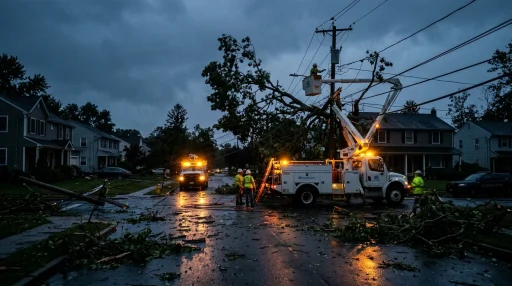
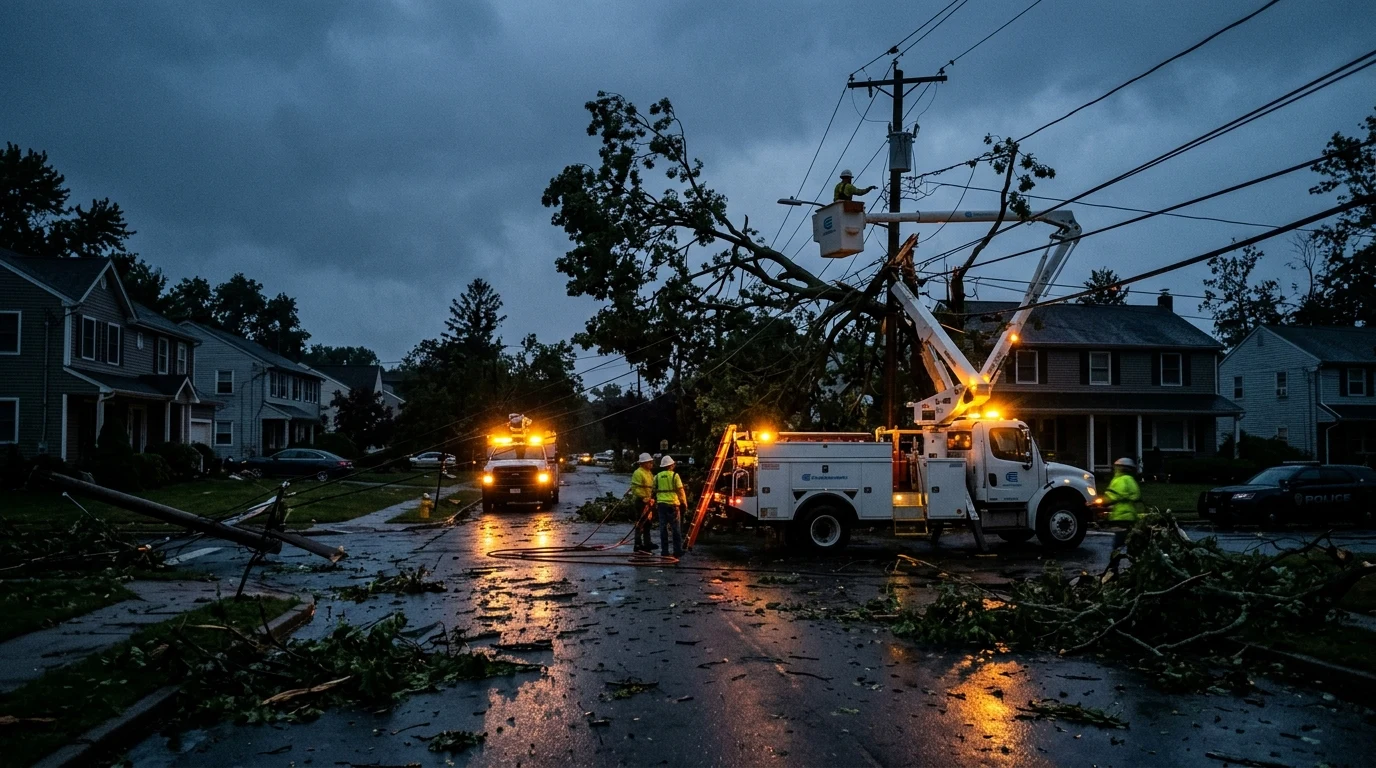
High winds hinder power restoration by imposing mandatory safety stand-downs on utility bucket trucks when sustained speeds exceed 30 to 35 mph. Active windstorms continuously topple trees onto newly repaired distribution circuits, create lethal arc-flash risks from swinging energized lines, and force repair crews to delay restoration until severe atmospheric turbulence subsides.
When destructive gale-force winds, derecho events, or severe coastal blizzards knock down utility lines, public frustration mounts as power outages stretch from hours into multiple days. Residents frequently observe utility service trucks parked along roadways or staging lots while neighborhoods remain dark, sparking questions about why repairs cannot proceed immediately. The reality of power restoration during persistent wind events is dictated by rigid occupational safety regulations, structural mechanical limits, and complex electrical grid physics.
The Operational Stand-Down: OSHA Wind Caps for Elevated Aerial Buckets
The single greatest operational obstacle facing electric utilities during high wind events is worker safety. Most primary overhead electrical distribution lines are strung on utility poles at heights between 35 and 50 feet. Working on energized or de-energized lines at these elevations requires vehicle-mounted elevating aerial platforms (bucket trucks).
Under Occupational Safety and Health Administration (OSHA) regulations (29 CFR 1910.269) and American National Standards Institute (ANSI) A92.2 standards, aerial bucket devices are strictly rated for maximum wind limits:
- The 30–35 MPH Threshold: Most major electric utility safety operating guidelines prohibit elevating aerial booms when sustained wind speeds exceed 30 mph or when localized wind gusts surpass 35–40 mph.
- Mechanical Tipping Forces: Elevated fiberglass booms act as long mechanical levers. High aerodynamic drag pushing against the bucket, lineman, and tooling creates immense lateral torque at the vehicle’s turret and outriggers. In saturated roadside soil conditions common during storms, lateral wind load can destabilize outrigger footings and trigger catastrophic vehicle overturns.
- Electric Shock and Minimum Approach Distances (MAD): Utility line mechanics rely on exact physical clearance margins (MAD) to protect against electrocution from nearby live phases. Turbulent, gusting winds buffet the bucket platform unpredictably, causing sudden lateral shifts of several inches or feet that could breach dielectric safety clearances.
Until weather stations and truck-mounted anemometers confirm that sustained wind speeds have fallen and remained below these legal safety thresholds, line mechanics are strictly required to keep booms lowered and remain sheltered in vehicle cabs.
The Secondary Damage Cycle: Why Outages Multiply During High Winds
Restoring an electrical grid during an ongoing wind event is often mathematically futile because the storm continues to inflict new damage faster than repair teams can mend it.
Vegetation and “Widow-Maker” Hazards
Over 70% of overhead electrical faults during windstorms stem from tree branches contacting wires. High winds tear down green branches, snap brittle timber, and uproot mature trees whose root systems have been loosened by accompanying rainfall. Even after a repair crew clears a downed branch on a street, lingering 45 mph gusts frequently topple another tree two spans upriver, immediately tripping the circuit breaker once again.
Furthermore, arborists and line crews face lethal ground hazards from “widow-makers”—large broken branches suspended precariously in the upper tree canopy directly over the work zone. Tree crews cannot legally operate chain saws or climb bucket trucks underneath these wind-buffeted, hanging deadwood hazards.
Conductor Galloping and Crossarm Destruction
When high-velocity winds sweep across long overhead wire spans, they induce severe vertical standing wave vibrations known as “galloping.” Galloping conductors bounce violently in 10-foot vertical oscillations, exerting massive dynamic cyclical loads on wooden crossarms, ceramic insulator pins, and pole tops. This cyclical fatigue can snap utility poles that were previously sound, creating sudden, unexpected circuit failures miles away from the initial storm front.
The Utility Restoration Process: A Step-by-Step Triage
Once wind speeds decline to safe levels, electric utilities execute a prioritized emergency response designed to restore electricity safely and systematically to the maximum number of consumers.
| Restoration Stage | Target Infrastructure Assets | Primary Objective | Typical Wind Restrictions |
|---|---|---|---|
| Phase 1: Public Safety & Damage Triage | Downed live lines, emergency service routes, 911 centers | De-energize lethal ground hazards; clear paths for emergency responders | Ground operations only; bucket trucks remain parked during gale gusts |
| Phase 2: Transmission Backbone | High-voltage corridors (69 kV – 500 kV), steel towers | Re-establish regional bulk power supply into major community substations | Requires aerial drone patrols or helicopter surveys; grounded in >40 mph winds |
| Phase 3: Substation Re-Energization | Distribution substations, busbars, power transformers | Ensure substations are receiving transmission power and ready to feed circuits | Substation yard switching performed on ground level; relatively wind-tolerant |
| Phase 4: Three-Phase Main Feeders | Primary arterial trunk lines along major roads (4 kV – 34.5 kV) | Restore power to large commercial corridors, supermarkets, and dense neighborhoods | Full aerial bucket operations required; strictly capped at <30–35 mph winds |
| Phase 5: Lateral Taps & Service Drops | Residential side streets, pole-mounted transformers, individual home drops | Restore remaining isolated residential customers and damaged meter bases | Final phase; requires individual street-by-street bucket repairs |
Cold Load Pickup: The Hidden Obstacle to Re-Energizing Circuits
Even after physical wires are reconnected and poles are replaced, turning the power back on is not as simple as closing a switch. Prolonged outages during cold or hot weather introduce a dangerous electrical grid phenomenon called Cold Load Pickup.
When a circuit has been de-energized for several hours during winter, every connected home’s electric heating systems, heat pumps, water heaters, and refrigerators are simultaneously calling for power. When the utility attempts to reclose the circuit breaker, the instantaneous inrush demand can be three to five times higher than normal peak operating load.
This massive inrush current mimics an electrical short circuit, causing automated substation protection relays to trip immediately back open. To overcome cold load pickup, utility dispatchers must manually sectionalize circuits into small subsections, re-energizing neighborhoods one block at a time to prevent substation transformer overloads.
Logistical Bottlenecks: Mutual Aid Mobilization and Staging
Major wind events frequently require utilities to request mutual aid assistance from neighboring states or regional utility consortiums. However, high winds impede external assistance:
- Highway Travel Restrictions: State departments of transportation frequently restrict high-profile commercial vehicles and heavy bucket trucks from crossing bridges or traversing interstates during high wind warnings (gusts >45–50 mph).
- Staging Base Assembly: Staging thousands of incoming mutual aid lineworkers, tree contractors, and fuel tankers requires establishing temporary logistics centers with housing, dining, and material yards before dispatching crews efficiently into storm-damaged sectors.
Household Preparation for Multi-Day Wind-Driven Outages
Understanding that restoration cannot occur during high winds helps homeowners take sensible precautions before severe weather arrives:
- Treat All Downed Lines as Live: Never approach downed wires or objects touching them. Energized wires can arc across several feet of damp soil. Stay at least 35 feet away and report immediately to 911 and your utility.
- Safe Generator Placement: Run portable generators strictly outdoors, at least 20 feet away from windows, doors, and air intake vents to prevent fatal carbon monoxide poisoning. Never backfeed home circuits through an ordinary wall outlet.
- Maintain Thermal Insulation: During winter windstorms, close interior doors to confine heat to a single living area, cover window drafts with thermal curtains or blankets, and avoid opening refrigerator doors unnecessarily.
Frequently Asked Questions
Why do utility trucks sit parked in lots during a major windstorm?
When sustained winds exceed 30 to 35 mph, OSHA regulations prohibit crews from raising bucket trucks due to tipping, boom oscillation, and electrocution hazards. Lineworkers use this stand-down time to assemble materials, review circuit schematics, stage replacement poles, and coordinate repair sequences so work can begin immediately once winds decrease.
Why does my power flicker on and off several times before going out completely?
Flickering power indicates that automated devices called reclosers are operating. When high winds cause tree branches to brush overhead wires, the recloser opens briefly to clear the arc flash, then recloses to restore service. If the branch falls away, power stays on; if the fault persists after 3 to 4 attempts, the recloser locks open permanently to prevent fires.
Why do my neighbors have power while my house is still dark?
Neighborhood homes are often served by different electrical distribution phases or separate lateral feeder circuits. Your neighbor’s electrical feed may originate from an undamaged main line, while your home may be connected to a lateral tap that suffered a blown transformer fuse or broken service drop.
Get our latest guides, news, and insights highlighted in your Google Search & AI Overviews.


