

✨ This article was AI edited. Editorial responsibility: WindPowerFacts.info.
Produced with AI. This article was artificially generated. Editorial responsibility: WindPowerFacts.info.
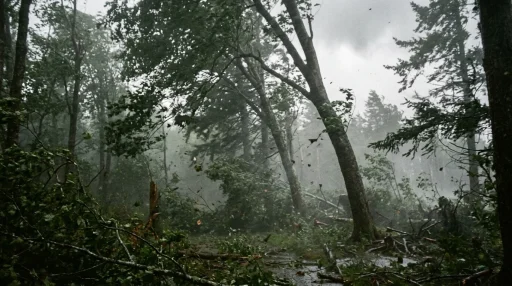
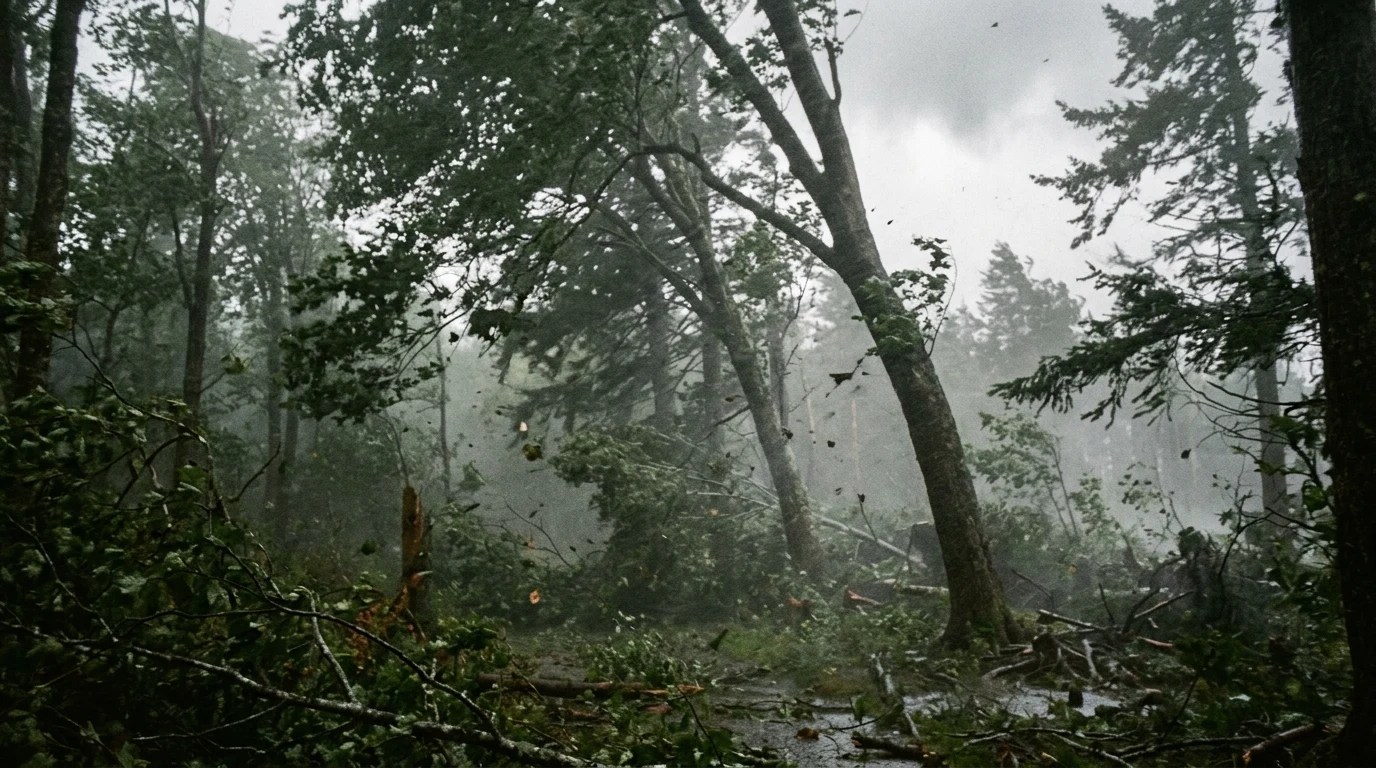
Can 60 mph winds knock down trees? Yes, 60 mph winds can and routinely do knock down trees. Classified as a Force 10 “Whole Gale” or violent storm on the Beaufort Scale, 60 mph winds generate a dynamic pressure of approximately 9.22 pounds per square foot, producing more than two full tons (4,000+ lbs) of lateral overturning force against a mature tree canopy. At 60 mph, shallow-rooted species, trees anchored in saturated soil, codominant stems, and brittle softwoods suffer widespread uprooting, trunk fracture, and catastrophic limb breakage.
When weather radar indicates a severe thunderstorm squall line, a summer derecho, or an approaching tropical storm packing sustained winds or gusts of 60 mph, meteorologists issue urgent High Wind Warnings for good reason. Sixty miles per hour is universally recognized by structural engineers, utility companies, and municipal foresters as the critical tipping threshold where tree failure transforms from isolated deadwood pruning into widespread, devastating tree blowdown that blocks roads, crushes roofs, and brings down regional electrical grids.
The Physics of 60 MPH Storm Winds: Overturning Force Calculations
Wind drag force against a three-dimensional biological canopy increases exponentially with the square of the wind speed (\(F \propto v^2\)). Calculating the dynamic stagnation pressure illustrates the extreme mechanical violence of a 60 mph gale:
\[ q = \frac{1}{2} \rho v^2 \approx 0.00256 \times (60)^2 \approx 9.22 \text{ lbs/sq ft} \]
| Wind Speed (MPH) | Dynamic Pressure (lbs/sq ft) | Total Thrust on 500 sq ft Canopy | Damage Impact on Forest and Suburban Trees |
|---|---|---|---|
| 20 mph | 1.02 lbs / sq ft | ≈ 510 lbs | Gentle flex; leaves flutter; zero damage |
| 40 mph | 4.10 lbs / sq ft | ≈ 2,050 lbs | Twig breakage; weak or dead limbs drop |
| 50 mph | 6.41 lbs / sq ft | ≈ 3,205 lbs | Large branches break; compromised trees begin failing |
| 60 mph | 9.22 lbs / sq ft | ≈ 4,610 lbs (2.3 Tons) | Widespread tree blowdown; trunk snaps; uprooting |
| 75 mph (Cat 1 Hurricane) | 14.40 lbs / sq ft | ≈ 7,200 lbs (3.6 Tons) | Severe forest blowdown; healthy mature hardwoods topple |
At 60 mph, a medium-sized suburban shade tree must resist over 4,600 pounds (2.3 tons) of continuous lateral shearing force applied 30 to 50 feet above the ground. This creates a rotational lever arm (overturning moment) exceeding 150,000 foot-pounds at the ground line—a load that tests the absolute physical limits of wood elasticity and subterranean root plate anchorage.
Why 60 MPH Winds Cause Catastrophic Blowdowns
While healthy, deeply anchored hardwoods with open canopies may survive 60 mph gusts, a large percentage of suburban and urban trees succumb due to four critical structural vulnerabilities:
1. Total Soil Shear Failure in Saturated Ground
Severe summer thunderstorms and autumnal nor’easters frequently deliver 2 to 4 inches of torrential rain immediately before or during the peak wind gusts. When soil reaches liquid saturation, the cohesive friction between root hairs and soil particles drops by over 70%. The tree’s root plate operates like a paddle in wet mud; the 4,600-pound wind thrust simply levers the entire root disc out of the earth, creating massive craters.
2. Foliage “Sail Effect” During Summer Storms
A deciduous tree in full summer foliage presents up to five times greater aerodynamic surface area than the same tree in its bare winter state. A 60 mph summer derecho or microburst creates immense aerodynamic drag that leaves healthy trees incapable of streamlining, leading to catastrophic timber leveled across whole neighborhoods.
3. Codominant Trunk Splitting (Included Bark Shear)
Trees with multiple competing central trunks (common in Bradford pears, silver maples, and ash) possess weak, bark-embedded unions. Under the chaotic, turbulent oscillations of 60 mph storm gusts, the competing stems sway in opposite harmonic cycles. This out-of-phase whipping creates massive tension across the union, tearing the tree apart down the center of the trunk.
4. Internal Heartwood Decay and Trunk Hollows
Fungal rots (such as Ganoderma or Inonotus) degrade the core structural heartwood fibers. When 60 mph winds exert intense bending stress, the outer sound wood cylinder buckles under compression, causing the trunk to shear completely off at 5 to 10 feet above ground level with an explosive crack.
Species Survivability Ranking in 60 MPH Winds
| Vulnerability Category | Tree Species | Observed Failure Rate at 60 MPH | Typical Mode of Failure |
|---|---|---|---|
| Extreme Vulnerability | Bradford Pear, Willow, Boxelder, Siberian Elm | Over 60% | Trunk splitting; massive limb shearing |
| High Vulnerability | White Pine, Norway Spruce, Silver Maple, Birch | 35% – 50% | Shallow root plate uprooting (windthrow) |
| Moderate Resistance | Red Oak, Sugar Maple, Ash, Sweetgum, Beech | 15% – 25% | Secondary branch breakage; stable root plate |
| High Storm Resistance | White Oak, Bur Oak, Hickory, Bald Cypress | Under 5% | Retains anchorage; absorbs load via deep taproot |
| Exceptional (Wind Adapted) | Sabal Palmetto, Cabbage Palm, Live Oak | Near 0% | Vascular flex; fronds shed cleanly to drop drag |
Emergency Safety Protocols During 60 MPH Wind Events
When sustained winds or gusts of 60 mph are forecast for your community, immediate life safety precautions are essential:
- Shelter on the Lowest Interior Level: Move away from exterior walls and second-floor bedrooms situated directly beneath large overhanging tree limbs. Falling limbs weighing thousands of pounds can penetrate standard asphalt shingle roofs and drywall ceilings.
- Never Park Under Canopy Trees: Position all motor vehicles inside a garage or away from the drip line of mature trees. Falling limbs are the leading cause of total vehicle write-offs during severe windstorms.
- Treat All Downed Lines as Live High-Voltage: Trees falling across utility corridors frequently snap three-phase power lines. Stay at least 35 feet away from any grounded wire and immediately call 911 and your local utility provider.
- Stay Indoors Until the Wind Passes: Do not attempt yard cleanup or chainsaw work until sustained winds drop below 30 mph. Loose dead branches caught high in the crown (“widowmakers”) can drop hours after the main storm has passed.
Frequently Asked Questions
Can a healthy tree survive 60 mph winds?
Yes. Many structurally sound, deeply rooted hardwoods (such as white oaks and hickories) can survive 60 mph winds without suffering major structural failure, provided the soil is dry and well-drained. However, weaker species and trees in waterlogged soil are at severe risk.
What is the difference between a Wind Advisory and a High Wind Warning?
A Wind Advisory is issued for sustained winds of 31 to 39 mph or gusts of 46 to 57 mph. A High Wind Warning is triggered when sustained winds reach 40+ mph or gusts exceed 58 mph, representing a threshold where widespread tree damage and infrastructure destruction are expected.
Does homeowners insurance cover a tree falling on your house in 60 mph winds?
Yes. Standard homeowners insurance policies cover damage to your dwelling, roof, and detached structures caused by falling trees during severe windstorms, regardless of whether the tree originated on your property or a neighbor’s property.
How can I prepare my trees for 60 mph winds?
Schedule an annual inspection with an ISA Certified Arborist. Professional crown thinning reduces aerodynamic drag by up to 30%, while selective pruning removes deadwood, corrects hazardous codominant stems, and installs structural support cables on high-value heritage trees.
Get our latest guides, news, and insights highlighted in your Google Search & AI Overviews.


