
✨ This article was AI edited. Editorial responsibility: WindPowerFacts.info.
Produced with AI. This article was artificially generated. Editorial responsibility: WindPowerFacts.info.
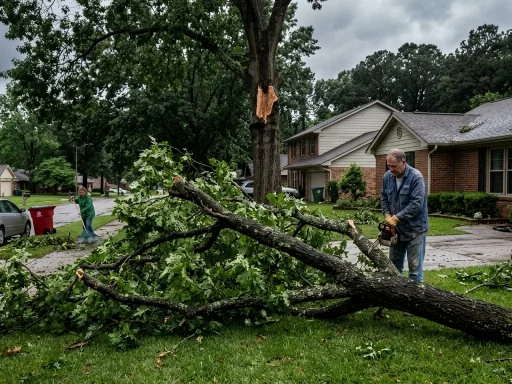
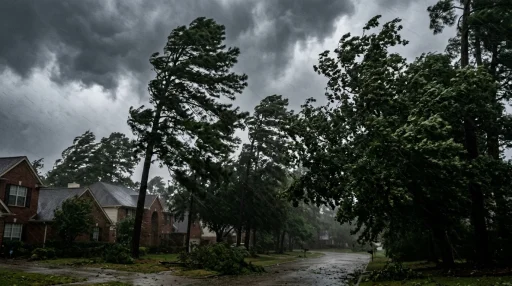
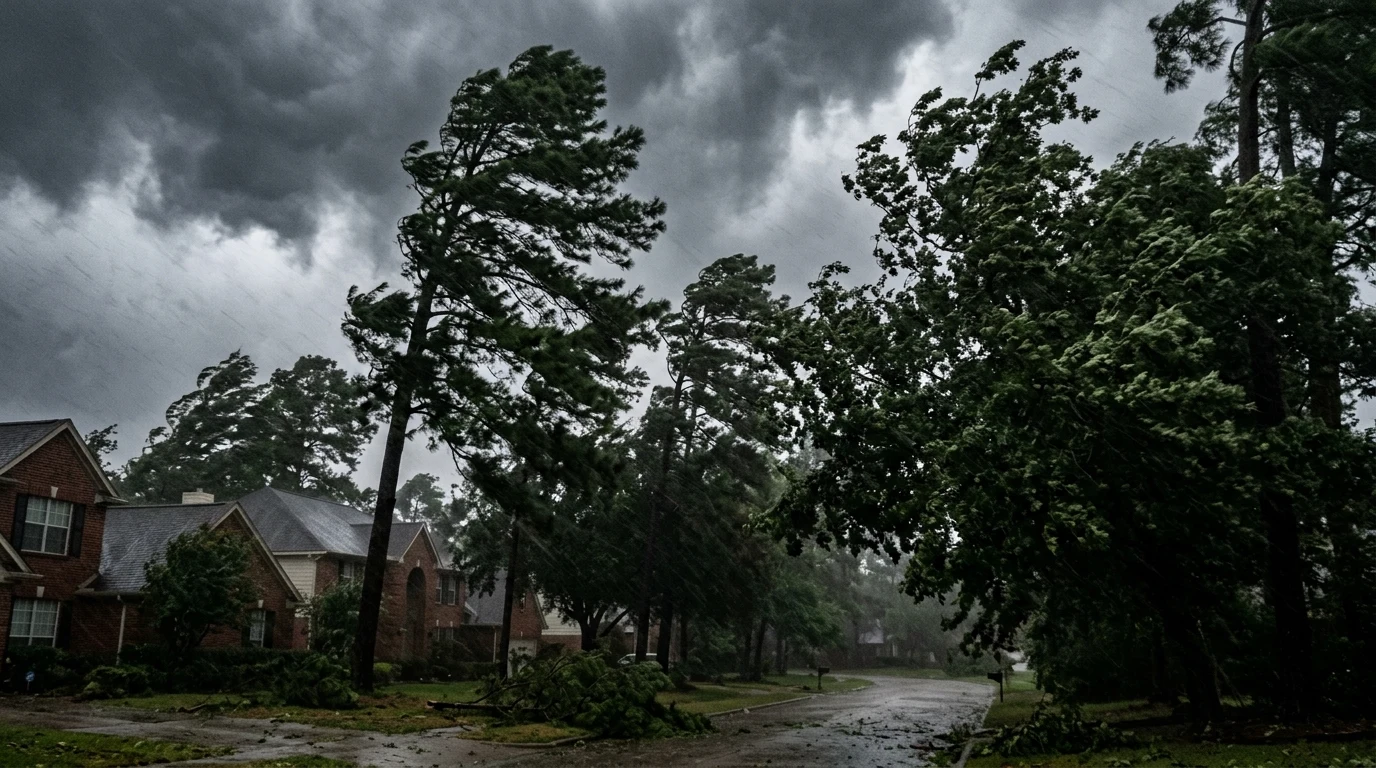
Can 50 mph winds knock down trees? Yes, sustained winds or gusts of 50 mph (80 km/h) can uproot structurally compromised trees, snap mature branches, and topple shallow-rooted or saturated-soil specimens. While healthy, dormant hardwoods typically endure gusts up to 55–60 mph, trees with fungal decay, root restriction, or full summer foliage frequently experience catastrophic failure at 50 mph.
Wind-induced tree failure is not a matter of random chance; it is governed by aerodynamic drag, lever-arm physics, wood mechanical strength, and root-soil anchorage resistance. When atmospheric pressure gradients produce wind gusts reaching 50 miles per hour, the dynamic lateral force exerted against a tree’s crown escalates exponentially. Understanding these engineering thresholds allows property owners, municipal arborists, and wind energy site planners to identify high-hazard trees before severe gales strike.
The Physics of Wind Loading on Tree Canopies
The relationship between wind velocity and aerodynamic force on a tree is non-linear. The force applied to a tree canopy follows the aerodynamic drag equation:
F = 0.5 × ρ × v² × C_d × A
Where ρ represents air density, v is wind velocity, C_d is the drag coefficient of the canopy, and A is the frontal crown area. Because velocity is squared, an increase in wind speed from 25 mph to 50 mph does not merely double the load—it multiplies the mechanical bending moment applied to the trunk and root flare by a factor of four.
Under a 50 mph gale, a mature oak or pine with a crown spread of 40 feet can experience lateral drag forces exceeding 4,000 to 6,000 pounds of force. This immense force acts as a giant lever arm anchored at the root plate, testing both the tensile and compressive strength of the outer wood fibers (known as modulus of rupture) and the shear cohesion of the surrounding soil matrix.
Wind Speed Thresholds and Tree Damage Severity
Meteorologists and certified arborists utilize empirical failure data to categorize how escalating wind velocities impact different species and structural conditions:
| Wind Velocity (MPH) | Beaufort Scale Rating | Typical Impact on Healthy Trees | Impact on Compromised or Saturated Trees | Primary Failure Mechanism |
|---|---|---|---|---|
| 30 – 38 mph | Near Gale (Force 7) | Whole trees in motion; minor twigs snap. | Deadwood and brittle secondary branches fall. | Brittle twig separation |
| 39 – 46 mph | Gale (Force 8) | Twigs break off trees; progress generally impeded. | Large diseased limbs snap; weak codominant stems split. | Branch junction shear |
| 47 – 54 mph | Strong Gale (Force 9) | Slight structural damage; healthy branches flex heavily. | Whole-tree uprooting; stem snapping; catastrophic canopy loss. | Root plate rotation / stem fracture |
| 55 – 63 mph | Whole Gale (Force 10) | Seldom experienced inland; trees broken or uprooted. | Widespread blowdowns; healthy mature specimens fail. | Severe stem buckle & root shearing |
| 64+ mph | Storm / Violent Gale (Force 11+) | Widespread structural damage across forest stands. | Complete clear-cut failure; structural destruction. | Catastrophic overturn |
As illustrated in the table, the 47 to 54 mph band is the critical tipping point where wind forces exceed the resisting strength of trees suffering from sub-surface rot, girdling roots, or elevated soil moisture.
Key Variables Determining Tree Failure at 50 MPH
Why does one tree withstand a 50 mph gust while an adjacent specimen of identical height topples over? Arithmetical analysis of tree biomechanics reveals five decisive variables:
1. Foliage Status (Sail Effect)
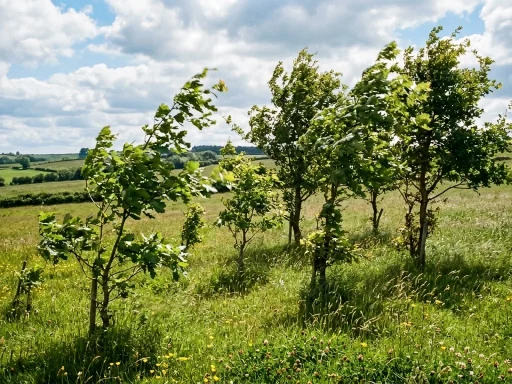
Deciduous trees in full leaf present three to four times the surface area of dormant, bare-branched trees. A 50 mph gust in mid-summer or early autumn (often accompanied by tropical storm remnants or severe convective thunderstorms) exerts substantially higher drag than an equivalent winter gale. Coniferous evergreens maintain full needles year-round, making them perpetually vulnerable to high-drag winter gales.
2. Soil Saturation and Moisture Dynamics
Soil friction holds the root plate in place. When excessive rainfall precedes high winds, soil pores become filled with water, dramatically reducing cohesion and shear strength. In waterlogged soil, the force required to rotate and lift the root plate drops by up to 50%, enabling a 50 mph wind to uproot trees that would easily withstand 70 mph winds in dry conditions.
3. Root Plate Integrity and Architecture
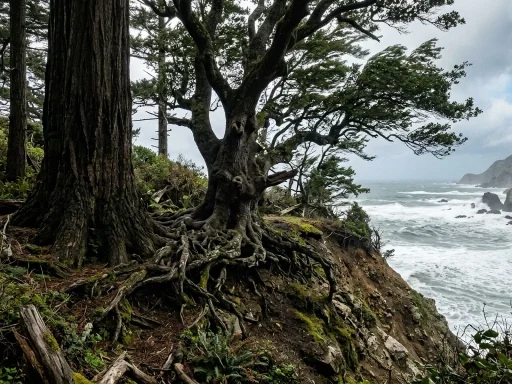
Trees develop anchor roots (sinker roots) and lateral taproots in response to prevailing wind directions. However, construction trenching, lawn compaction, sidewalk installations, or root-rot pathogens (such as Armillaria or Ganoderma) silently destroy this foundational stability. A tree with 30% root decay can fail under moderate 45–50 mph loads without exhibiting any visible canopy symptoms.
4. Wood Density and Modulus of Rupture (MOR)
Wood species exhibit vastly different mechanical properties. Wood strength is measured by its Modulus of Rupture (MOR) in megapascals (MPa) and Modulus of Elasticity (MOE) in gigapascals (GPa). Species with low MOR values snap under flexural bending stresses that dense hardwoods shrug off effortlessly.
Species Vulnerability Comparison: Strong vs. Weak Trees
The following matrix outlines common North American and European tree species categorized by their structural wind tolerance under 50 mph conditions:
| Species Common Name | Botanical Name | Wood Density / MOR | Wind Tolerance Rating | Common Failure Mode |
|---|---|---|---|---|
| Live Oak | Quercus virginiana | High (119 MPa) | Exceptional (Resistant) | Rare failure; occasional twig drop |
| Bald Cypress | Taxodium distichum | Moderate-High (82 MPa) | Exceptional (Resistant) | Buttressed root stability; wind streamlines |
| White Oak | Quercus alba | High (105 MPa) | High (Resistant) | Branch failure only in severe rot |
| Hickory | Carya ovata | Very High (139 MPa) | High (Resistant) | High tensile resistance; deep taproots |
| Eastern White Pine | Pinus strobus | Low (59 MPa) | Low-Moderate (Vulnerable) | Stem snap at middle trunk; shallow roots |
| Bradford Pear | Pyrus calleryana | Moderate (Brittle junctions) | Extremely Low (High Hazard) | Catastrophic trunk splitting along codominant stems |
| Silver Maple | Acer saccharinum | Low-Moderate (61 MPa) | Low (High Hazard) | Brittle limb drop; internal decay pocket collapse |
| Weeping Willow | Salix babylonica | Low (33 MPa) | Very Low (High Hazard) | Shallow surface roots; severe limb snapping |
How to Assess Your Trees for 50 MPH Wind Risk
Preventing storm-related property damage requires systematic inspection of potential failure points. Follow this chronological methodology to evaluate specimen hazard levels:
- Inspect the Ground Flare: Examine the soil within a 10-foot radius of the trunk. Look for soil mounding, ground cracks, or exposed broken root ends, which indicate the root plate has already begun tilting during prior wind events.
- Detect Fungal Conks and Cavities: Check the lower trunk for bracket fungi (conks) or hollow cavities. Fungal fruiting bodies indicate advanced internal cellulose decay, signifying loss of structural load capacity.
- Evaluate Branch Unions and V-Crotches: Look for codominant stems with included bark. Tight “V” shaped branch unions lack interlocking wood fibers and represent the most frequent point of structural failure when 50 mph winds torque the canopy.
- Identify Deadwood and Hanging Limbs: Remove dead limbs larger than 2 inches in diameter. Dead branches possess zero flexural elasticity and act as aerodynamic sails before snapping cleanly.
- Implement Crown Thinning: Professional crown thinning removes select interior branches, reducing the overall drag coefficient (C_d) by up to 35% without altering the natural silhouette of the tree.
Frequently Asked Questions
Will a 50 mph wind gust knock over a healthy tree?
Under normal conditions with dry or moderately damp soil, a healthy mature tree with an intact root system and sound wood structure will not topple in a 50 mph gust. However, if the soil is fully saturated from prolonged rainfall, even healthy trees with shallow root plates can experience windthrow at 50 mph.
What is the minimum wind speed required to uproot trees?
Uprooting can occur at speeds as low as 40 to 45 mph in compromised trees growing in waterlogged soil or with severe root rot. For healthy trees with well-anchored root plates, uprooting typically requires sustained winds or gusts exceeding 55 to 65 mph.
Which trees are most likely to fall during a 50 mph wind storm?
Fast-growing species with brittle wood or shallow root systems are the most vulnerable. Bradford pears, silver maples, boxelders, willows, and mature white pines have the highest failure rates during 50 mph wind events.
Does pruning trees reduce wind damage during storms?
Yes. Proper crown thinning reduces the wind resistance (aerodynamic drag) of the tree canopy by allowing wind to filter through rather than pushing against a solid leafy wall. Avoid topping trees, as topping leads to weakly attached weakly sprout growth that fails rapidly in high winds.
Get our latest guides, news, and insights highlighted in your Google Search & AI Overviews.