
✨ This article was AI edited. Editorial responsibility: WindPowerFacts.info.
Produced with AI. This article was artificially generated. Editorial responsibility: WindPowerFacts.info.
Can 20 mph winds knock down trees? No, 20 mph winds cannot knock down a healthy, living tree. In meteorology and biomechanics, 20 mph is categorized as a Force 5 “Fresh Breeze” on the Beaufort Scale, producing a dynamic lateral wind load of less than 1.0 pound per square foot. Any tree that collapses in a 20 mph breeze was already structurally dead or critically compromised by advanced root rot, severe trunk hollows, or recent root severing from construction.
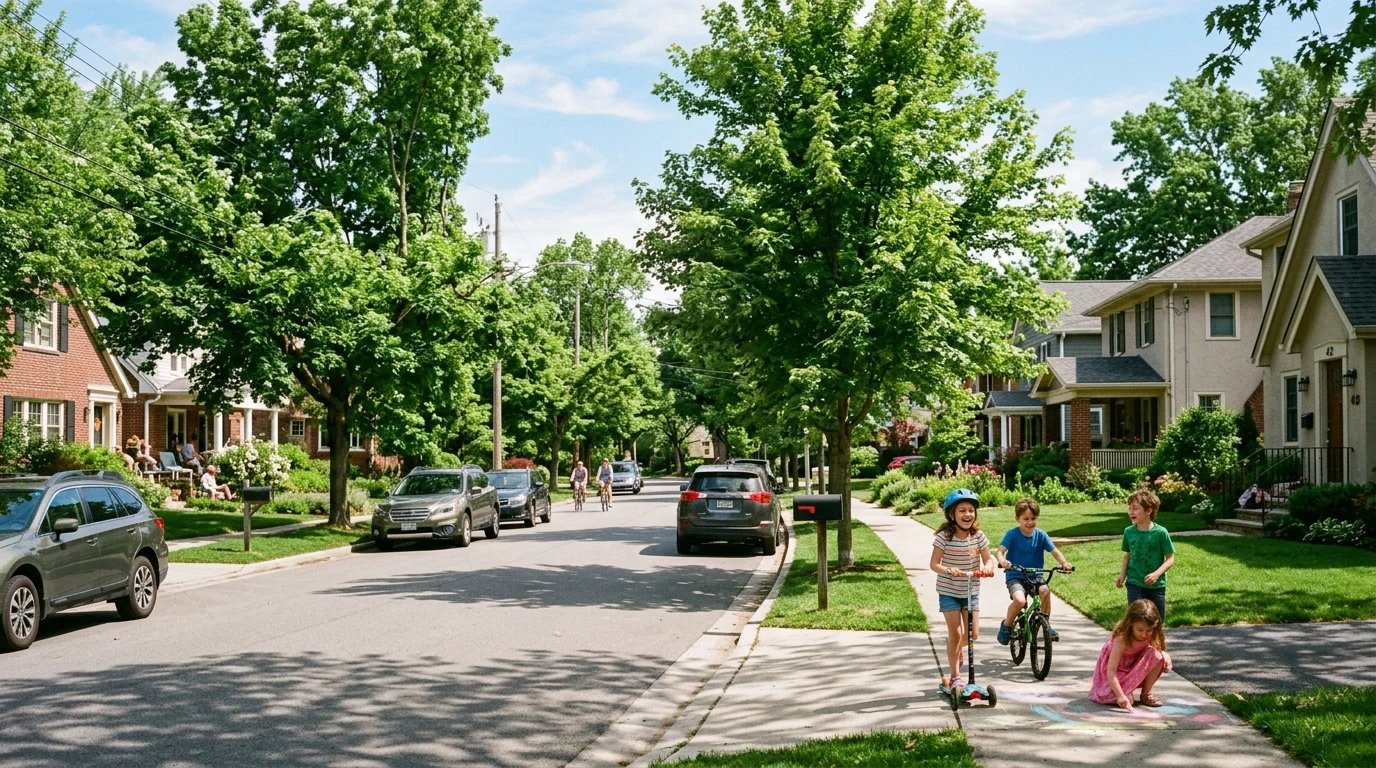
Weather alerts warning of 20 mph breezes frequently cause undue anxiety for property owners with large suburban trees. However, trees have evolved over hundreds of millions of years to withstand dynamic atmospheric loading. A 20 mph breeze is an everyday meteorological occurrence across most temperate climates. Understanding the precise mechanical difference between normal aerodynamic tree flexing and catastrophic structural failure helps homeowners assess real tree risks objectively.
The Physics of a 20 MPH Breeze: Force vs. Wood Strength
In mechanical physics, the dynamic pressure exerted by air in motion against an obstacle is calculated using the stagnation pressure formula:
\[ q = \frac{1}{2} \rho v^2 \]
Where \(\rho\) is the air density (approximately 0.00237 slugs/cu ft at sea level) and \(v\) is the wind speed in feet per second. At 20 mph (29.3 feet per second), the resulting dynamic wind pressure is a modest 1.02 pounds per square foot.
| Wind Velocity (MPH) | Dynamic Pressure (lbs/sq ft) | Overturning Moment on 30-ft Tree | Arboricultural Risk Classification |
|---|---|---|---|
| 10 mph | 0.25 lbs / sq ft | Negligible | Light air; gentle leaf rustle |
| 20 mph | 1.02 lbs / sq ft | ≈ 400 – 600 ft-lbs | Completely safe; daily adaptive flex |
| 40 mph | 4.10 lbs / sq ft | ≈ 2,400 ft-lbs | Weak twigs and dead branches drop |
| 60 mph | 9.22 lbs / sq ft | ≈ 5,800 ft-lbs | Severe gale; structural tree damage begins |
| 80 mph | 16.40 lbs / sq ft | ≈ 10,500 ft-lbs | Hurricane force; healthy trees uproot/snap |
To place this in biological perspective, sound hardwood trunk tissue (such as white oak, sugar maple, or hickory) possesses a Modulus of Rupture (MOR) between 10,000 and 15,000 pounds per square inch (psi). A 20 mph breeze utilizes less than 2% of the mechanical elastic capacity of a healthy tree trunk.
Why Does a Tree Occasionally Topple at 20 MPH?
When emergency tree removal crews are called to a fallen tree on a day with only 20 mph breezes, post-failure forensic inspection consistently uncovers one of four catastrophic pre-existing conditions:
1. “Near-Total” Basal Root Rot (Armillaria / Ganoderma)
Root decay fungi can silently digest the subterranean root system of an oak or pine over a 10-year period. By the time a tree falls in a 20 mph breeze, more than 80% of its structural anchor roots have already turned to mush. The tree was literally balancing in the soil like a telephone pole stuck loosely in sand.
2. Severe Soil Satiation and Mud Liquefaction
If days of prolonged torrential flooding or broken underground water mains saturate the top 36 inches of soil, the soil particles lose their cohesive shear strength. Because a fully foliated deciduous canopy can weigh several thousand pounds, gravity alone causes the unbalanced tree to slowly topple over into the mud under the slightest lateral breeze.
3. Extreme Hollow Trunks with Thin Residual Shells
In urban forestry, the 1/3 Rule of Sound Wood states that a hollow tree is safe as long as the thickness of the sound outer wood cylinder is at least one-third of the total trunk radius. When carpenter ants, beetles, and heartwood rot erode the sound wood shell down to less than 1 to 2 inches on a massive 30-inch trunk, the hollow cylinder buckles under minimal lateral force.
4. Trenching and Anchor Root Severing
Contractors digging utility trenches for cable lines, natural gas pipes, or retaining wall foundations often use mechanical ditch diggers within 5 to 10 feet of a mature tree. Cutting through two or three major structural buttress roots removes up to 50% of the tree’s windward anchor lines, leaving it vulnerable to collapse under minor wind gusts.
Tree Life Stages: How Seedlings, Saplings, and Mature Trees Respond
The biomechanical response to a 20 mph wind varies across distinct developmental growth phases:
| Growth Stage | Anatomical Scale | Response to 20 MPH Wind | Failure Risk and Management |
|---|---|---|---|
| Seedling (Year 1) | <18 inches tall; tender green stem | Stems bend close to ground; high flexibility | Risk of stem desiccation if dry; zero snap risk |
| Nursery Sapling (Years 2–5) | 6–12 ft tall; 1–2 inch caliper | Trunk bends up to 30 degrees; sways actively | Beneficial; stimulates radial wood growth; avoid tight staking |
| Semi-Mature (Years 6–20) | 15–35 ft tall; broad canopy | Secondary branches flutter; slight trunk deflection | Healthy development; thins dead interior twigs naturally |
| Mature Canopy (Years 21+) | 40–80+ ft tall; massive timber volume | Minor rhythmic oscillation; dissipates energy effortlessly | Zero risk unless compromised by severe hollows or root decay |
How Arborists Calculate Critical Wind Thresholds (The Pulling Test)
Consulting arborists evaluate tree stability using non-destructive Static Pulling Tests (Elasto-Inclino Method). A motorized winch applies a calibrated horizontal pulling force to the upper trunk while sensitive elastometers and inclinometers measure trunk bending strains and root plate rotational tilt down to 0.01 degrees.
Data recorded during pulling tests demonstrates that healthy urban trees maintain a safety factor exceeding 4.0 to 6.0 against 20 mph winds. In engineering terms, this means a healthy tree possesses four to six times more mechanical holding strength than is required to resist a 20 mph breeze.
How Healthy Trees Benefit from 20 MPH Winds
Far from being dangerous, 20 mph wind events are biologically beneficial to growing trees. Through the process of thigmomorphogenesis, the physical flexing of the trunk and branches stimulates the cambium layer to produce denser cell walls, higher concentrations of lignin, and wider base flares. Trees exposed to regular 20 mph breezes develop robust, storm-resistant root plates and stocky tapers that prepare them to survive 70+ mph severe storms later in life.
Homeowner Pre-Storm Tree Inspection Routine
Rather than worrying during a 20 mph breeze, perform this 4-point visual inspection around your property twice a year:
- Check the Ground Around the Root Flare: Look for cracked, heaved soil or exposed white fungal mats (mycelium) near the base of the trunk.
- Look for Included Bark in “V-Crotches”: Where two main trunks meet, ensure the union is a broad, healthy “U-shape” rather than a tight, pinched “V-shape” with seams of weeping dark fluid.
- Scan for Dead “Hanger” Branches: Dead limbs that have already detached but remain hung up in the crown are the only genuine hazard during a 20 mph breeze, as wind can dislodge them.
- Verify Tree Leaning: Trees that have grown with a natural lean toward sunlight are stable because they have laid down reaction wood. However, a tree that has suddenly developed a new lean with fresh soil lifting on the opposite side requires immediate emergency removal.
Frequently Asked Questions
Can 20 mph winds damage power lines through trees?
A 20 mph breeze will not blow trees over onto power lines. However, if unpruned, dead, brittle twigs or dry branches hang directly over energized electrical wires, wind sway can cause dead limbs to brush against or fall onto lines, causing localized circuit trips.
Is 20 mph wind considered high for driving?
No. 20 mph crosswinds have almost no noticeable effect on passenger vehicles, though high-profile commercial tractor-trailers, RVs, and towed travel trailers may feel mild lateral buffeting on open highway bridges.
Can patio furniture or trampolines blow away in 20 mph winds?
Lightweight unsecured items (such as empty plastic trash cans, cardboard recycling, or loose pool floats) can be moved by 20 mph gusts. Heavy patio furniture and anchored trampolines remain completely stationary.
What wind speed requires an official National Weather Service warning?
The National Weather Service typically issues a Wind Advisory when sustained winds are expected between 31 and 39 mph (or gusts between 46 and 57 mph), and a High Wind Warning when sustained winds reach 40+ mph or gusts exceed 58 mph.
Do newly planted trees need to be protected from 20 mph winds?
Unless planted on an exceptionally steep, exposed ridge with loose sandy soil, healthy nursery saplings do not need protective wrapping or rigid staking against 20 mph winds. Allowing saplings to sway naturally stimulates stronger root development.
Get our latest guides, news, and insights highlighted in your Google Search & AI Overviews.