
✨ This article was AI edited. Editorial responsibility: WindPowerFacts.info.
Produced with AI. This article was artificially generated. Editorial responsibility: WindPowerFacts.info.
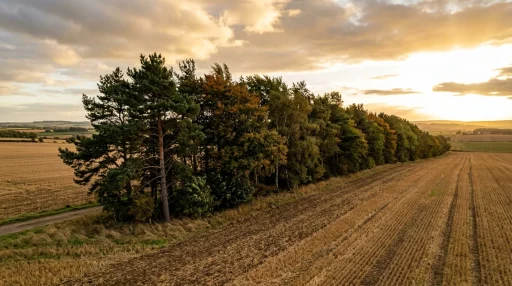
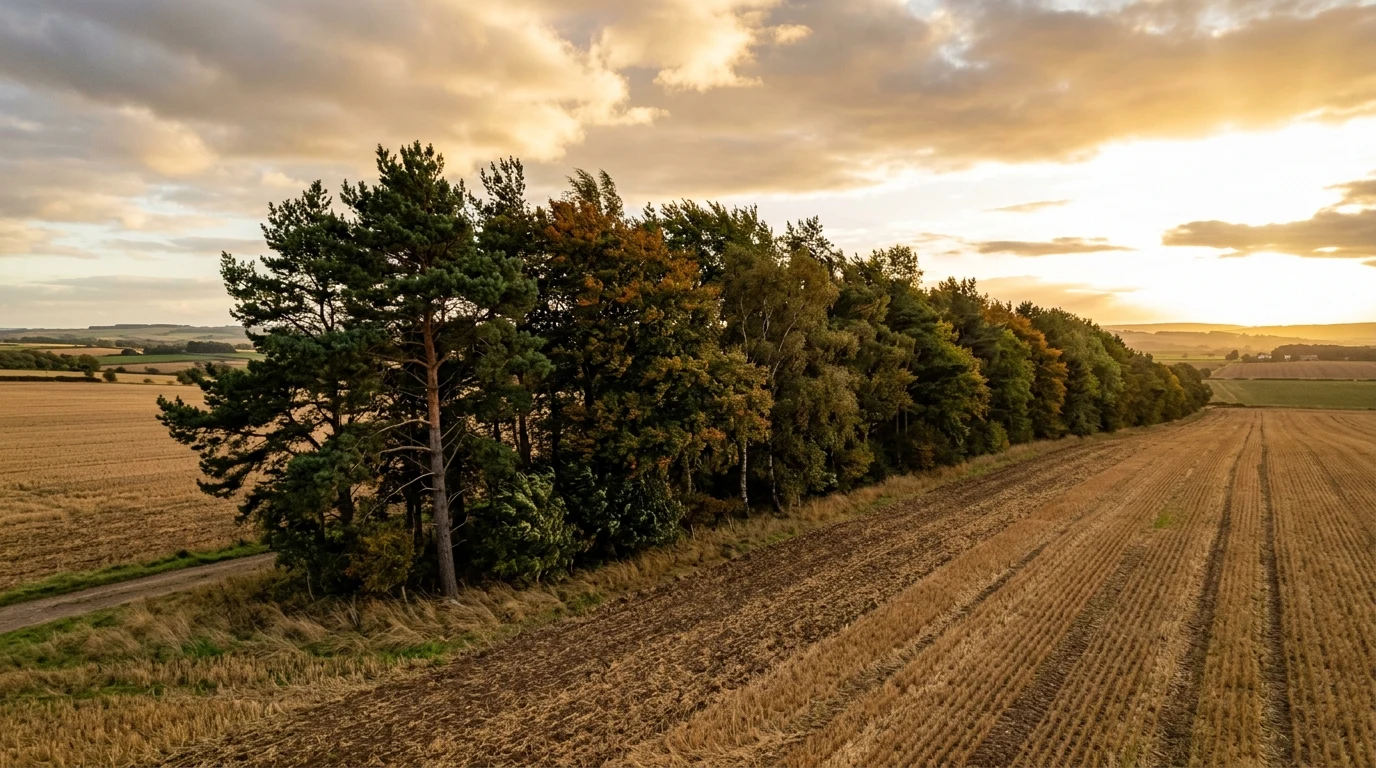
How do trees interact with wind, and what is tree wind dynamics? Tree wind dynamics encompass both how wind forces impact tree biomechanics and how trees are engineered as natural windbreaks to modify local atmospheric airflow. A properly designed multi-row tree shelterbelt reduces downwind wind speed by 50% to 75% across a horizontal distance spanning 20 to 30 times the mature tree height, mitigating soil erosion, shielding livestock, and cutting residential heating costs.
The physical interaction between atmospheric wind currents and forest or landscape trees represents one of the most critical fields of environmental biomechanics. In nature, trees must continuously adapt to survive persistent drag, vortex shedding, and catastrophic gale gusts. Simultaneously, humans have utilized trees for centuries as biological wind barriers—known as windbreaks, shelterbelts, or hedgerows—to tame fierce prairie blizzards, desert sandstorms, and coastal gales.
The Aerodynamics of Tree Windbreaks and Shelterbelts
A common misconception is that a tree windbreak should act like a solid brick wall to stop the wind. In fluid dynamics, a solid wall forces all air upward over the top, creating a severe low-pressure vacuum on the leeward side that generates violent turbulent downbursts and eddy currents. Trees, however, function as permeable aerodynamic filters:
| Barrier Density / Porosity | Airflow Behavior | Effective Protected Distance Downwind | Application & Performance |
|---|---|---|---|
| Dense / Solid (<20% Porosity) | Air is forced abruptly over top; strong turbulent leeward eddies | Short zone (5–10x tree height) | Poor for wind protection; causes snow drifting directly against barrier |
| Optimal Porosity (40% – 50%) | Part of wind filters through; remaining air glides smoothly over crown | Maximum zone (20–30x tree height) | Ideal shelterbelt: gradual wind reduction without leeward turbulence |
| Sparse / Open (>70% Porosity) | Air passes through with minimal speed reduction | Minimal (1–3x tree height) | Ineffective for wind mitigation; only filters light breezes |
By allowing roughly 40% to 50% of the air to filter through the canopy while lifting the remainder smoothly into higher atmospheric layers, a permeable row of mixed conifers and deciduous trees creates a vast, tranquil microclimate on the downwind (leeward) side.
Biomechanical Adaptations: How Trees Survive High Winds
To endure gale-force atmospheric winds without snapping their trunks or uprooting their root plates, trees utilize four sophisticated biomechanical adaptations:
1. Dynamic Crown Streamlining and Reconfiguration
As wind velocity increases, a tree does not remain rigid. Instead, its leaves, petioles, and secondary branches roll together into a streamlined conical shape. For example, tulip poplar and maple leaves curl into tight aerodynamic tubes at high speeds, reducing their effective frontal surface area and total wind drag by up to 60% compared to still air.
2. Thigmomorphogenic Buttressing
Continuous wind sway stimulates the tree’s cambium layer to produce reaction wood and deposit lignin primarily at the trunk base. This creates a wide, flared root buttress that transfers lateral overturning moments directly into the surrounding soil volume.
3. Damped Harmonic Sway
Trees do not oscillate like simple pendulums. Because each branch and twig has a slightly different mass and natural resonance frequency, the motion of secondary limbs absorbs and dissipates the kinetic energy of wind gusts, preventing the tree from entering destructive harmonic resonance.
4. Root Plate Anchorage
A mature tree relies on an integrated “root-soil plate.” The combination of deep vertical taproots (where present), lateral structural roots under tension on the windward side, and heavy hinge roots under compression on the leeward side creates a rigid subterranean platform capable of withstanding tens of thousands of foot-pounds of torque.
Top Tree Species for High-Wind Landscapes and Windbreaks
Selecting appropriate species depends on soil drainage, hardiness zone, and local wind exposure conditions. The most resilient high-wind species include:
| Tree Species | Foliage Type | Wind Resilience Tier | Ideal Microclimate Role |
|---|---|---|---|
| Eastern Redcedar (Juniperus virginiana) | Evergreen Conifer | Exceptional (90+ mph) | Dense windbreak outer row; highly drought and salt tolerant |
| Bur Oak (Quercus macrocarpa) | Deciduous Hardwood | Exceptional (85+ mph) | Long-lived structural core; immense taproot and dense wood |
| Austrian Pine (Pinus nigra) | Evergreen Conifer | High (75+ mph) | Year-round winter wind shield and snow drift control |
| Green Ash (Fraxinus pennsylvanica) | Deciduous Hardwood | High (75+ mph) | Rapid growth; wide spreading root plate |
| Bald Cypress (Taxodium distichum) | Deciduous Conifer | Exceptional (Hurricane proof) | Wet soils and coastal flood zones; massive knee buttresses |
How to Design a High-Performance Residential Windbreak
To shield a homestead, barn, or renewable energy facility from harsh prevailing winds, follow standard USDA Natural Resources Conservation Service (NRCS) shelterbelt guidelines:
- Orient Perpendicular to Prevailing Winds: If winter storm winds arrive from the northwest, orient your tree rows from southwest to northeast.
- Plant a Minimum of 3 Continuous Rows:
- Row 1 (Windward): Dense, low-growing shrubs (such as lilac or buffaloberry) to trap blowing snow and low-level surface wind.
- Row 2 (Center): Fast-growing tall deciduous hardwoods or medium conifers (such as bur oak, green ash, or spruce).
- Row 3 (Leeward): Dense tall evergreen conifers (such as redcedar, pinyon pine, or Douglas fir) for year-round thermal wind obstruction.
- Maintain Setback Distances: Plant the innermost row of your shelterbelt at least 100 to 150 feet away from your home or driveway to prevent winter snow drifts from settling directly onto structures.
Frequently Asked Questions
How much do windbreak trees reduce heating bills?
According to the U.S. Department of Agriculture, a mature, well-positioned evergreen windbreak can reduce home winter heating energy consumption by 20% to 40% by cutting cold air infiltration through drafty exterior walls and window seals.
At what distance from trees is wind reduction greatest?
The greatest wind speed reduction occurs at a distance of approximately 2 to 5 times the mature height of the windbreak on the leeward side, where wind speeds can drop by up to 75%. Measurable wind attenuation extends outward up to 20 to 30 times the tree height.
Why do single trees in open fields fall over more easily than trees in woods?
While solitary open-grown trees develop thicker trunks, forest trees that are suddenly exposed when surrounding woods are cleared (“fragmentation”) lack the flared caliper, deep root plate, and wind conditioning needed to withstand sudden, unbuffered open-field gales.
Can trees generate clean wind energy?
Researchers are developing piezoelectric “nanoleaf” devices and biomimetic tree-shaped micro-turbines that harvest mechanical energy from wind-induced branch vibrations, though utility-scale wind farms remain far more efficient for bulk power generation.
Get our latest guides, news, and insights highlighted in your Google Search & AI Overviews.